
Skin dullness, pigmentation, uneven skin tone, and dark patches are common concerns that can affect people of different ages and skin types. Factors such as prolonged sun exposure, pollution, hormonal changes, acne marks, ageing, dehydration, lifestyle habits, and certain skin conditions can make the skin appear darker, uneven, or less radiant. For people searching for Skin Whitening Treatment in Indore, understanding the underlying cause of pigmentation is an important first step before choosing any treatment.
Skin whitening treatments in modern dermatology are generally focused on improving uneven pigmentation, reducing the appearance of dark spots, and restoring a more even and healthy-looking complexion rather than changing a person’s natural skin colour. Depending on the cause and severity of pigmentation, dermatologists may recommend topical skincare, chemical peels, laser-based procedures, or other clinically appropriate treatments.
At Dr. Dashore’s DHL Skin Centre, patients seeking Skin Whitening Treatment in Indore receive an individualized assessment to identify the cause of dullness or pigmentation before a treatment plan is recommended. A personalized approach helps address the specific skin concern while maintaining skin health and a natural appearance.
What Causes Skin Dullness and Pigmentation?
Before selecting a Skin Brightening Treatment in Indore, it is important to understand why the skin has become dull or pigmented.
Melanin is the natural pigment responsible for skin colour. When melanin production increases or becomes unevenly distributed, dark spots, patches, or an uneven complexion can develop.
Several factors can contribute to these changes.
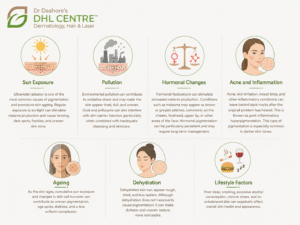
Sun Exposure
Ultraviolet radiation is one of the most common causes of pigmentation and premature skin ageing. Regular exposure to sunlight can stimulate melanin production and cause tanning, dark spots, freckles, and uneven skin tone.
People who spend significant time outdoors without adequate sun protection may develop persistent pigmentation over time.
Pollution
Environmental pollution can contribute to oxidative stress and may make the skin appear tired, dull, and uneven. Dust and pollutants can also interfere with skin barrier function, particularly when combined with inadequate cleansing and skincare.
Hormonal Changes
Hormonal fluctuations can stimulate increased melanin production. Conditions such as melasma may appear as brown or greyish patches, commonly on the cheeks, forehead, upper lip, or other areas of the face.
Hormonal pigmentation can be particularly persistent and may require long-term management.
Acne and Inflammation
Acne, skin irritation, insect bites, and other inflammatory conditions can leave behind dark marks after the original problem has healed. This is known as post-inflammatory hyperpigmentation.
This type of pigmentation is especially common in darker skin tones.
Ageing
As the skin ages, cumulative sun exposure and changes in skin cell turnover can contribute to uneven pigmentation, age spots, dullness, and a less uniform complexion.
Dehydration
Dehydrated skin can appear rough, tired, and less radiant. Although dehydration does not necessarily cause pigmentation, it can make dullness and uneven texture more noticeable.
Lifestyle Factors
Poor sleep, smoking, excessive alcohol consumption, chronic stress, and an unbalanced diet can negatively affect overall skin health and appearance.
What Is Skin Whitening Treatment?
Skin Whitening Treatment in Indore generally refers to dermatological procedures and skincare approaches designed to improve uneven pigmentation, dullness, tanning, and dark spots.
The objective of medically supervised treatment is not to artificially change a person’s natural complexion. Instead, dermatological treatment focuses on reducing excess pigmentation and improving skin clarity, texture, and evenness.
Depending on the patient’s condition, treatment may involve:
- Prescription or dermatologist-recommended topical products
- Chemical peels
- Laser or light-based treatments
- Skin rejuvenation procedures
- Medical-grade skincare
- Sun protection
- Combination treatment approaches
The appropriate option depends on the cause of pigmentation, skin type, severity, and previous treatment history.
Who May Consider Skin Whitening Treatment?
People may consider Skin Whitening Treatment in Indore when they experience concerns such as:
- Uneven skin tone
- Facial pigmentation
- Sun tanning
- Dark spots
- Post-acne marks
- Melasma
- Dull-looking skin
- Age-related pigmentation
- Uneven complexion
- Rough or tired-looking skin
However, treatment should not be selected solely based on the desire for lighter skin. A dermatologist should first determine whether the concern is pigmentation, tanning, dryness, inflammation, or another skin condition.
Common Skin Pigmentation Problems
Different pigmentation conditions require different approaches.
Melasma
Melasma causes brown, grey, or darker patches, most commonly on the face. It can be associated with hormonal changes, sunlight, and genetic factors.
Because melasma can recur, treatment often involves both pigmentation management and strict sun protection.
Post-Inflammatory Hyperpigmentation
Dark marks can develop after acne, eczema, irritation, burns, or other inflammatory skin problems.
Treatment focuses on reducing existing pigmentation while preventing further inflammation.
Sun-Induced Pigmentation
Long-term ultraviolet exposure can result in tanning, freckles, and localized dark spots. Consistent sunscreen use is an important part of managing this type of pigmentation.
Uneven Skin Tone
Some people may have generally uneven pigmentation without one clearly defined condition. Dermatological assessment can help identify contributing factors and determine an appropriate treatment approach.
Skin Whitening Treatment Options
There is no single treatment that works for every type of pigmentation. A dermatologist may recommend one or more options depending on the patient’s condition.
Topical Treatments
Certain dermatologist-recommended creams and serums can help manage pigmentation by influencing melanin production, reducing inflammation, supporting skin renewal, or improving skin barrier function.
Ingredients may include vitamin C, retinoids, azelaic acid, niacinamide, or other medically appropriate agents.
Prescription products should be used only according to professional guidance because inappropriate use can cause irritation or worsening pigmentation.
Chemical Peels
Chemical peels use carefully selected chemical solutions to remove or exfoliate damaged outer layers of skin.
Depending on the type and concentration used, peels may help improve:
- Dullness
- Uneven pigmentation
- Mild acne marks
- Uneven texture
- Sun-related skin changes
The type of peel should be selected according to the patient’s skin type and specific concern.
Laser Treatments
Certain laser and light-based technologies can target pigmentation and stimulate skin rejuvenation.
Laser treatment may be considered for selected cases of pigmentation, sun spots, uneven complexion, or other concerns. However, not every laser is appropriate for every skin type.
Patients with darker skin tones require particularly careful treatment selection and settings because inappropriate laser use can sometimes cause post-inflammatory hyperpigmentation.
Skin Rejuvenation Procedures
Some skin rejuvenation treatments can improve texture, radiance, and overall skin quality while addressing selected pigmentation concerns.
The treatment may be recommended alone or combined with topical skincare depending on the patient’s needs.
Combination Treatments
Pigmentation can have multiple contributing factors. In such cases, dermatologists may combine skincare, sun protection, peels, or energy-based procedures.
A combination approach may be more effective than relying on one treatment alone, particularly for persistent pigmentation.
How Does Pigmentation Treatment Work?
The exact mechanism depends on the treatment selected.
Topical medications may reduce excess melanin production or increase skin cell turnover. Chemical peels exfoliate selected layers of the skin. Laser-based treatments use controlled energy to target specific pigmentation or stimulate skin remodeling.
Regardless of the method, pigmentation treatment usually requires patience.
The skin may improve gradually over several weeks or months, and some conditions such as melasma may require ongoing maintenance because pigmentation can return.
How Many Sessions Are Required?
The number of sessions required for Skin Brightening Treatment in Indore depends on:
- Type of pigmentation
- Severity of pigmentation
- Skin type
- Treatment selected
- Previous treatments
- Response to therapy
- Sun exposure
- Individual healing response
Some patients may notice improvement after a single procedure, while others require a series of treatments.
A dermatologist can provide a more realistic treatment schedule after examining the skin.
Is Skin Whitening Treatment Safe?
When performed by a qualified dermatologist using an appropriate treatment for the patient’s skin type, pigmentation treatments can generally be performed safely.
However, every procedure has potential risks.
Depending on the treatment, temporary redness, dryness, irritation, sensitivity, swelling, or changes in pigmentation can occur.
The risk of complications can increase when people use unregulated whitening products, excessive bleaching agents, inappropriate steroid creams, or unsupervised high-strength treatments.
Professional assessment is therefore important before starting any pigmentation treatment.
Why Should You Avoid Unregulated Skin Whitening Products?
Many people attempt to lighten their skin using over-the-counter or unregulated products. Some may contain inappropriate combinations of steroids, bleaching agents, or other ingredients.
Long-term or improper use can potentially cause:
- Skin thinning
- Acne-like eruptions
- Increased sensitivity
- Visible blood vessels
- Irritation
- Uneven pigmentation
- Rebound darkening
- Damage to the skin barrier
Products marketed as instant whitening should therefore be approached with caution.
The safer approach is to identify the actual cause of pigmentation and use dermatologist-guided treatment.
Importance of Sunscreen During Pigmentation Treatment
Sun protection is one of the most important parts of Pigmentation Treatment in Indore.
Ultraviolet exposure can stimulate melanin production and make existing pigmentation darker. Without adequate sun protection, even an effective treatment may provide less satisfactory or shorter-lasting results.
A dermatologist may recommend:
- Broad-spectrum sunscreen
- Appropriate SPF according to individual needs
- Reapplication during prolonged outdoor exposure
- Physical protection such as hats or umbrellas
- Limiting unnecessary direct sun exposure
Sun protection should remain part of the skincare routine even after visible pigmentation improves.
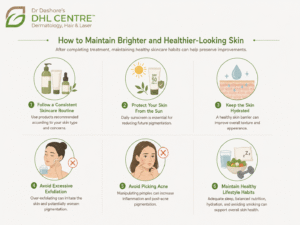
How to Maintain Brighter and Healthier-Looking Skin
After completing treatment, maintaining healthy skincare habits can help preserve improvements.
Follow a Consistent Skincare Routine
Use products recommended according to your skin type and concerns.
Protect Your Skin From the Sun
Daily sunscreen is essential for reducing future pigmentation.
Keep the Skin Hydrated
A healthy skin barrier can improve overall texture and appearance.
Avoid Excessive Exfoliation
Over-exfoliating can irritate the skin and potentially worsen pigmentation.
Avoid Picking Acne
Manipulating pimples can increase inflammation and post-acne pigmentation.
Maintain Healthy Lifestyle Habits
Adequate sleep, balanced nutrition, hydration, and avoiding smoking can support overall skin health.
Who Is the Right Candidate for Skin Whitening Treatment?
A good candidate is generally someone with a specific pigmentation, tanning, dullness, or uneven skin tone concern who understands that treatment aims to improve skin clarity and evenness rather than change their natural skin colour.
Treatment may be considered for people with:
- Sun tanning
- Mild to moderate pigmentation
- Post-acne dark marks
- Uneven skin tone
- Dull-looking skin
- Selected cases of melasma
- Sun-induced dark spots
- Texture and radiance concerns
A consultation is important because pigmentation can sometimes be a symptom of an underlying skin condition.
Who Should Avoid or Postpone Treatment?
Not every skin concern should immediately be treated with a peel or laser.
Treatment may need to be postponed in cases of:
- Active skin infection
- Open wounds
- Significant skin irritation
- Severe active inflammation
- Recent aggressive cosmetic procedures
- Certain medical conditions affecting skin healing
Pregnant or breastfeeding patients should discuss any planned pigmentation treatment and topical medication with a qualified healthcare professional before proceeding.
Why Choose Dr. Dashore’s DHL Skin Centre for Skin Whitening Treatment in Indore?
Choosing an experienced dermatology centre is important when treating pigmentation because incorrect treatment can sometimes worsen the problem.
Dr. Dashore’s DHL Skin Centre has more than three decades of experience in dermatology and aesthetic care. The centre provides a range of skin, hair, and laser treatments using modern technologies and evidence-based approaches.
Patients seeking Skin Whitening Treatment in Indore can undergo a detailed assessment to identify their pigmentation pattern, skin type, and treatment requirements.
Key advantages include:
- More than 35 years of dermatology experience
- Advanced skin and laser treatment facilities
- Personalized treatment planning
- Experienced dermatology specialists
- Evidence-based treatment protocols
- Comprehensive skin and aesthetic services
- Individual assessment before procedures
- Focus on skin safety
- Natural-looking treatment goals
- Modern dermatological technologies
The objective is to treat the underlying pigmentation concern while preserving healthy skin.
Why Choose Dr. Shuken Dashore?
Dr. Shuken Dashore is a dermatologist with experience in advanced skin, hair, laser, and aesthetic treatments. His professional work includes clinical dermatology, research, and innovation in dermatological procedures.
He has received international training and recognition for his contributions to dermatology and dermatosurgery.
Some of his professional highlights include:
- International training in dermatology
- Recipient of the All India Best Young Dermatologist Award 2024 at DERMACON, Hyderabad
- Research experience in advanced skin and hair treatments
- Published research papers in dermatology and dermatosurgery journals
- Invited faculty at international dermatology conferences
- Recipient of the IADVL President’s Appreciation Award
- Recipient of the ACSI Best Innovation Award
- Experience in advanced procedures including laser treatments, PRP, mesotherapy, and hair transplantation
- Focus on evidence-based dermatology
- Personalized treatment planning based on individual patient needs
His approach emphasizes appropriate diagnosis, treatment selection, and long-term skin health.
Why Professional Diagnosis Matters for Pigmentation
Pigmentation is not a single condition. Melasma, post-inflammatory hyperpigmentation, sun damage, freckles, medication-related pigmentation, and other conditions can look similar but require different treatment approaches.
For this reason, choosing a Skin Whitening Treatment in Indore without first identifying the cause may not produce the desired result.
During a dermatological consultation, the doctor may evaluate:
- Type of pigmentation
- Location of pigmentation
- Skin type
- Duration of the concern
- Previous treatments
- Sun exposure
- Skincare products
- Hormonal factors
- History of acne or inflammation
This information helps determine whether topical treatment, a peel, laser therapy, or another approach is appropriate.
Skin Whitening vs Skin Brightening: What Is the Difference?
The terms skin whitening and skin brightening are often used interchangeably, but they do not necessarily mean the same thing.
Skin whitening is commonly used to describe treatments aimed at reducing excess pigmentation or tanning. Skin brightening generally refers to improving dullness, uneven tone, texture, and overall radiance.
Modern dermatological care focuses on healthy, even-toned skin rather than trying to change a person’s natural genetic skin colour.
The goal is to reduce abnormal or excessive pigmentation while maintaining the skin’s natural appearance.
How Long Do Skin Whitening Results Last?
The longevity of pigmentation improvement depends on the underlying cause.
Pigmentation caused by temporary tanning may improve substantially with appropriate treatment and sun protection. Conditions such as melasma may require ongoing maintenance because they can recur.
Results can be supported by:
- Daily sunscreen use
- Consistent skincare
- Avoiding unnecessary sun exposure
- Treating acne and inflammation promptly
- Following dermatologist recommendations
- Attending follow-up appointments when required
Long-term maintenance is particularly important for people prone to recurring pigmentation.
Summary
Skin Whitening Treatment in Indore can help address concerns such as pigmentation, tanning, dark spots, uneven skin tone, and dull-looking skin. However, the right treatment depends on the underlying cause rather than simply the desire for a lighter complexion.
Dermatological options may include topical treatments, chemical peels, laser procedures, skin rejuvenation treatments, or carefully selected combinations. Professional assessment is particularly important because some pigmentation conditions, such as melasma, can worsen with inappropriate treatment.
Sun protection remains one of the most important parts of pigmentation management. Healthy skincare habits and avoiding unregulated whitening products can also help protect the skin and maintain treatment results.
At Dr. Dashore’s DHL Skin Centre, treatment is planned according to the patient’s skin type, pigmentation pattern, concerns, and individual goals. The focus remains on improving skin health, reducing unwanted pigmentation, and achieving a more even and naturally healthy-looking complexion.
Frequently Asked Questions (FAQs) – Skin Whitening Treatment in Indore
1. What is Skin Whitening Treatment in Indore?
Skin Whitening Treatment in Indore generally refers to dermatological treatments used to reduce excessive pigmentation, tanning, dark spots, and uneven skin tone. The goal is to improve skin clarity and evenness rather than change a person’s natural skin colour.
2. What causes skin dullness and pigmentation?
Common causes include sun exposure, hormonal changes, melasma, acne marks, inflammation, ageing, pollution, dehydration, and certain lifestyle factors.
3. Which treatment is best for pigmentation?
There is no single treatment that is best for everyone. Depending on the condition, a dermatologist may recommend topical medications, chemical peels, laser treatment, skin rejuvenation, or a combination approach.
4. Can chemical peels reduce pigmentation?
Certain chemical peels can help improve selected types of pigmentation, dullness, and uneven skin tone. The peel must be chosen according to the patient’s skin type and pigmentation condition.
5. Can laser treatment remove pigmentation?
Some laser and light-based treatments can improve specific forms of pigmentation. However, the appropriate technology and settings depend on the pigmentation type and skin tone.
6. Is skin whitening treatment permanent?
Results are not necessarily permanent. Pigmentation can return due to sun exposure, hormonal factors, ageing, or the underlying condition. Long-term skincare and sun protection are important for maintaining results.
7. How many sessions are required?
The number of sessions varies according to the pigmentation, treatment method, skin type, and individual response. Some people may need one procedure, while others may require multiple sessions.
8. Is skin whitening treatment safe?
Dermatologist-guided treatment can generally be performed safely when the appropriate procedure is selected for the individual’s skin. Temporary redness, irritation, dryness, or sensitivity may occur depending on the treatment.
9. Can I use whitening creams without consulting a dermatologist?
It is better to avoid unregulated or high-strength whitening products without professional guidance. Some products may contain inappropriate ingredients that can damage the skin or worsen pigmentation.
10. Is sunscreen necessary after pigmentation treatment?
Yes. Sun protection is an essential part of pigmentation management. Ultraviolet exposure can stimulate melanin production and contribute to recurrence or worsening of pigmentation.
Conclusion – Skin Whitening Treatment in Indore
Skin dullness, tanning, pigmentation, and uneven skin tone can develop for many different reasons, so effective treatment begins with identifying the underlying cause. Skin Whitening Treatment in Indore can include dermatologist-guided skincare, chemical peels, laser-based procedures, and other skin rejuvenation approaches depending on the patient’s condition.
The aim of modern dermatological treatment is not to alter a person’s natural skin colour but to reduce unwanted pigmentation, improve uneven tone, enhance skin texture, and restore a healthier-looking complexion. Results can vary depending on the pigmentation type, skin condition, treatment selected, and adherence to sun protection and skincare.
If you are considering Skin Brightening Treatment in Indore, professional consultation can help determine which option is appropriate for your skin. At Dr. Dashore’s DHL Skin Centre, treatment plans are customized according to individual skin concerns, pigmentation patterns, skin type, and aesthetic goals.
With appropriate diagnosis, evidence-based treatment, consistent sun protection, and long-term skincare, pigmentation and dullness can be managed while maintaining a natural and healthy appearance.