
Hair Transplant Treatment in Indore is a surgical hair restoration procedure used to address certain types of permanent hair loss. While choosing the right procedure and experienced hair specialist is important, understanding what happens after surgery is equally valuable. Hair transplant recovery is a gradual process, and patients should know what to expect during the first few days, weeks, and months following the procedure.
People considering Hair Transplant Treatment in Indore often have questions about swelling, redness, scabbing, washing the scalp, returning to work, shedding, and when new hair growth will become visible. The recovery experience can vary depending on the individual, the transplant technique used, the number of grafts transplanted, scalp condition, and adherence to aftercare instructions.
At Dr. Dashore’s DHL Skin Centre, patients undergoing hair restoration receive personalized guidance before and after treatment. Understanding the Hair Transplant Recovery Timeline can help patients prepare properly, follow post-operative instructions, and maintain realistic expectations about the gradual growth of transplanted hair.
What Is a Hair Transplant?
A hair transplant is a surgical procedure in which hair follicles are taken from a donor area and placed into areas affected by hair loss.
The donor area is usually located on the back or sides of the scalp because these follicles may be more resistant to the effects of pattern hair loss.
Common hair transplant techniques include:
- Follicular Unit Extraction (FUE)
- Follicular Unit Transplantation (FUT)
The choice of technique depends on factors such as the patient’s hair loss pattern, donor hair availability, scalp characteristics, treatment goals, and the surgeon’s assessment.
The transplanted follicles require time to establish themselves in their new location. Therefore, the final outcome does not appear immediately after surgery.
Why Is Hair Transplant Recovery Important?
Recovery is an important part of the overall hair restoration process.
After surgery, the scalp needs time to heal around both the donor and recipient areas. Following appropriate aftercare can help reduce unnecessary irritation and support normal healing.
Patients undergoing Hair Transplant Treatment in Indore should understand that temporary redness, swelling, scabbing, and shedding can occur during recovery.
It is also important to remember that transplanted follicles follow a natural hair growth cycle. New hair growth takes several months and continues to improve gradually.
Hair Transplant Recovery Timeline
Every patient heals differently, but the following timeline provides a general overview of what may happen after hair transplant surgery.
Day 0 – Immediately After Surgery
Immediately after the procedure, the scalp may appear red or slightly swollen.
The transplanted area may contain small graft sites, while the donor area may also show temporary redness or sensitivity.
Patients may experience:
- Mild tenderness
- Redness
- Tightness
- Slight swelling
- Small scabs around grafts
- Temporary sensitivity
Your doctor will provide specific instructions regarding medications, sleeping position, scalp care, and activity restrictions.
It is important not to touch, scratch, rub, or unnecessarily manipulate the newly transplanted area.
Day 1 to Day 3
During the first few days, mild swelling or tenderness may continue.
Some patients experience swelling around the forehead or eyelids. This can occur because of fluid used during the procedure and does not necessarily indicate a complication.
During this stage, patients should follow their surgeon’s instructions carefully.
Depending on the individual case, recommendations may include:
- Sleeping with the head elevated
- Avoiding pressure on the transplanted area
- Taking prescribed medications as directed
- Avoiding strenuous physical activity
- Keeping the scalp protected from unnecessary trauma
- Following instructions regarding scalp washing
Patients should avoid self-directed treatments or products that were not recommended by their doctor.
Day 4 to Day 7
By the end of the first week, swelling and tenderness generally begin to settle.
Small scabs may remain around the transplanted follicles. These scabs are part of the normal healing process.
Patients should not forcibly remove scabs because doing so can irritate the scalp and potentially disturb healing grafts.
Depending on the surgical technique and individual recovery, the doctor may provide specific instructions for gentle washing and scalp care.
Week 2
By the second week, most visible signs of the procedure begin to reduce.
The scalp may still have mild redness or residual crusting in some patients, particularly those with sensitive skin.
The transplanted hairs may appear short and uneven at this stage.
Patients often expect immediate permanent hair growth, but this is not how transplantation works. The transplanted follicles need time to move through their natural growth cycle.
Week 3 to Week 4 – Shedding Phase May Begin
One of the most important things to understand about Hair Transplant Recovery is that transplanted hair may shed during the early weeks.
This is commonly called shock loss or shedding phase.
The visible hair shaft may fall out while the transplanted follicle remains in the scalp. This does not necessarily mean that the transplant has failed.
Patients should not panic if the transplanted hairs become less visible during this stage.
The follicle can remain in place and later enter a new growth cycle.
Month 2 – Early Recovery Phase
During the second month, the scalp generally continues healing while the transplanted follicles remain in their growth cycle.
Some patients may not see significant new growth at this stage.
This period can feel frustrating because the scalp may appear similar to its pre-treatment state or even look temporarily thinner after shedding.
Patience is important because visible growth usually takes several more months.
Month 3 – Early New Growth
Around the third month, some patients may begin noticing early signs of new hair growth.
The new hairs can initially appear:
- Fine
- Thin
- Light
- Uneven
- Soft in texture
This is normal because newly growing hair gradually becomes thicker as it matures.
The speed of growth varies considerably between individuals.
Month 4 to Month 6 – Noticeable Hair Growth
Between the fourth and sixth months, visible improvement often becomes more noticeable.
Patients may observe:
- Increasing hair density
- More visible coverage
- Gradually thicker hairs
- Improved appearance of the transplanted region
- Better blending with surrounding hair
The result is still developing at this stage.
Not all transplanted follicles necessarily grow at exactly the same rate, so uneven density during this period can be normal.
Month 6 to Month 9 – Continued Improvement
During this phase, transplanted hair generally continues to mature.
Hair shafts may become thicker, longer, and stronger.
The overall appearance can gradually improve as more follicles enter active growth.
Patients undergoing Hair Transplant Treatment in Indore should continue following their dermatologist’s recommendations during this period.
Follow-up appointments can help monitor growth and identify whether any additional management is appropriate.
Month 9 to Month 12 – Major Improvement
By approximately nine to twelve months, many patients can see substantial improvement in the transplanted area.
The new hair may look:
- Thicker
- Longer
- More natural
- Better integrated with surrounding hair
However, the final result can vary depending on the number and quality of transplanted follicles, donor hair characteristics, surgical technique, and individual growth cycle.
After 12 Months – Maturation Continues
Hair transplant results can continue maturing beyond the first year.
Some patients may experience further improvement in thickness and overall appearance after twelve months.
The final assessment should therefore take into account the individual’s hair growth cycle rather than judging the result too early.
What Happens to Transplanted Hair After Surgery?
Understanding the hair growth cycle can help explain why recovery takes several months.
After transplantation, transplanted follicles may temporarily enter a resting phase. The visible hair shaft can shed while the follicle remains viable.
Later, the follicle can begin producing a new hair shaft.
The new hair initially tends to be fine and may gradually become thicker as it matures.
This process explains why a successful transplant does not immediately produce dense, mature hair.
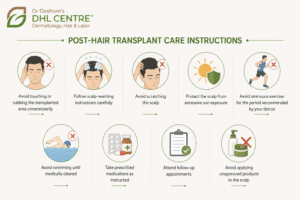
Hair Transplant Aftercare
Following proper Hair Transplant Aftercare is important during the healing period.
Your surgeon or dermatologist will provide instructions based on the procedure performed.
General aftercare may include:
- Avoid touching or rubbing the transplanted area unnecessarily
- Follow scalp-washing instructions carefully
- Avoid scratching the scalp
- Protect the scalp from excessive sun exposure
- Avoid strenuous exercise for the period recommended by your doctor
- Avoid swimming until medically cleared
- Take prescribed medications as instructed
- Attend follow-up appointments
- Avoid applying unapproved products to the scalp
Individual instructions may differ, so patients should prioritize the guidance provided by their treating doctor.
When Can You Wash Your Hair After a Hair Transplant?
The timing of the first hair wash depends on the surgical technique and the surgeon’s instructions.
Patients should not assume that aggressive washing is safe immediately after surgery.
When washing is permitted, the scalp generally needs to be handled gently. Avoid scratching or applying strong pressure to the transplanted area.
The doctor may recommend a specific shampoo or washing technique during the initial recovery period.
When Can You Return to Work?
Many people can return to work relatively soon after a hair transplant, particularly if their work is not physically demanding.
However, the timing varies depending on:
- Procedure performed
- Number of grafts
- Extent of swelling
- Nature of the patient’s work
- Individual healing
People with physically demanding jobs may require additional time before returning to strenuous activities.
Your treating doctor can provide individualized advice.
When Can You Exercise After Hair Transplant?
Strenuous exercise is usually restricted during the early recovery period because excessive sweating, friction, or increased physical strain may irritate the scalp.
Patients should follow the specific activity timeline provided by their surgeon.
Light activities may be resumed earlier in some cases, while intense exercise should generally wait until the scalp has adequately healed.
When Can You Sleep Normally After Hair Transplant?
During the initial days, patients may be advised to sleep with the head elevated and avoid direct pressure on the transplanted area.
This can help reduce swelling and minimize accidental contact with the scalp.
As healing progresses, normal sleeping positions can usually be resumed according to the surgeon’s instructions.
When Can You Go in the Sun?
The newly treated scalp can be sensitive to sunlight during recovery.
Patients should follow their doctor’s advice regarding sun exposure and physical protection.
Avoiding prolonged direct sunlight during the early healing period can help reduce irritation and protect the recovering skin.
What Should You Avoid After Hair Transplant?
During recovery, patients may be advised to avoid:
- Scratching the scalp
- Picking scabs
- Heavy exercise
- Swimming until cleared
- Excessive sun exposure
- Tight headwear unless approved
- Hair products not recommended by the doctor
- Smoking
- Alcohol when specifically restricted by the treating doctor
- Self-prescribed medications or procedures
Following aftercare instructions consistently can support a smoother recovery.
Is Hair Shedding After Transplant Normal?
Temporary shedding after transplantation can occur and is commonly referred to as shock loss.
This can be concerning for patients because the transplanted hairs may appear to disappear after initially being visible.
However, the hair shaft can shed while the follicle remains in place.
New hair growth may begin later as the follicle enters a new growth cycle.
Persistent or unusual hair loss should be discussed with the treating specialist.
What Factors Affect Hair Transplant Recovery?
Recovery can vary from person to person.
Factors include:
Surgical Technique
FUE and FUT involve different approaches and may have different recovery experiences.
Number of Grafts
Larger procedures may require more extensive scalp healing.
Individual Healing
Every person’s healing response is different.
Scalp Condition
Existing scalp inflammation or other scalp problems may affect recovery.
Aftercare
Following the surgeon’s instructions can help minimize avoidable irritation.
Overall Health
General health, nutrition, smoking, and other lifestyle factors can influence healing and hair health.
How Long Does It Take to See Final Hair Transplant Results?
Patients should generally expect a gradual process rather than immediate results.
Early healing occurs within the first few weeks, while visible new hair growth may begin after several months.
Significant improvement may develop between approximately six and twelve months, with further maturation possible beyond the first year.
The exact timeline varies depending on the individual and the procedure.
Who Is a Suitable Candidate for Hair Transplantation?
Hair transplantation is not suitable for every person experiencing hair loss.
Suitable candidates may include individuals with:
- Permanent pattern hair loss
- Adequate donor hair
- Stable or appropriately assessed hair loss
- Realistic expectations
- Sufficient scalp health
- A treatment area that can benefit from transplantation
A professional assessment is essential before deciding on surgery.
Why Diagnosis Matters Before Hair Transplant
Not every form of hair loss requires transplantation.
Temporary hair shedding caused by stress, illness, nutritional deficiency, hormonal changes, or certain medical conditions may improve when the underlying cause is treated.
Performing a transplant without identifying the cause of hair loss may not address ongoing hair loss in other areas.
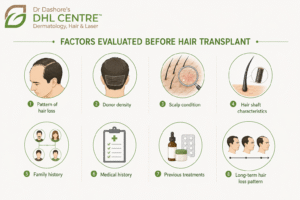
A dermatologist or hair specialist can assess:
- Pattern of hair loss
- Donor density
- Scalp condition
- Hair shaft characteristics
- Family history
- Medical history
- Previous treatments
- Long-term hair loss pattern
This evaluation helps determine whether transplantation is appropriate.
Why Choose Dr. Dashore’s DHL Skin Centre for Hair Transplant Treatment in Indore?
Choosing an experienced centre is an important part of hair restoration because the outcome depends on proper diagnosis, treatment planning, surgical technique, graft handling, and post-operative care.
Dr. Dashore’s DHL Skin Centre has more than three decades of experience in dermatology and provides comprehensive hair and scalp care.
Patients considering Hair Transplant Treatment in Indore can receive individualized assessment and treatment planning based on their hair loss pattern, donor availability, scalp condition, and restoration goals.
Key features include:
- More than 35 years of dermatology experience
- Dedicated hair and scalp treatment facilities
- Advanced hair restoration procedures
- Personalized treatment planning
- Experienced dermatology specialists
- Evidence-based treatment protocols
- Hair transplantation services
- PRP and other hair restoration procedures
- Individual donor-area assessment
- Focus on natural-looking outcomes
Why Choose Dr. Shuken Dashore?
Dr. Shuken Dashore is a dermatologist with experience in advanced skin, hair, laser, and aesthetic procedures.
His professional work includes clinical dermatology, research, and innovation in dermatological treatments.
He has received international training and recognition for his contributions to dermatology and dermatosurgery.
Some of his professional highlights include:
- International training in dermatology
- Recipient of the All India Best Young Dermatologist Award 2024 at DERMACON, Hyderabad
- Research experience in advanced skin and hair treatments
- Published research papers in dermatology and dermatosurgery journals
- Invited faculty at international dermatology conferences
- Recipient of the IADVL President’s Appreciation Award
- Recipient of the ACSI Best Innovation Award
- Experience with hair transplantation, PRP, mesotherapy, and laser procedures
- Focus on evidence-based dermatology
- Personalized treatment planning based on individual patient needs
For patients considering Hair Restoration Treatment in Indore, professional assessment and individualized planning are important parts of achieving realistic and natural-looking results.
Hair Transplant Recovery: What Is Normal?
During recovery, patients may experience temporary changes that can appear concerning but may be part of the normal healing process.
These may include:
- Redness
- Mild swelling
- Tenderness
- Small scabs
- Temporary numbness or altered sensation
- Early shedding
- Fine new hair growth
- Uneven growth during the early months
However, severe pain, increasing swelling, pus, fever, significant bleeding, or other unexpected symptoms should be reported to the treating doctor promptly.
How to Support Healthy Hair Growth After Transplant
A hair transplant does not replace the need for long-term hair care.
Patients can support overall hair health by:
- Following prescribed treatment
- Maintaining a balanced diet
- Avoiding crash diets
- Protecting the scalp from excessive sun exposure
- Managing stress
- Avoiding smoking
- Treating scalp conditions
- Following the recommended skincare and hair-care routine
- Attending follow-up appointments
The transplanted follicles may be permanent, but surrounding non-transplanted hair can continue to thin depending on the underlying condition.
Does a Hair Transplant Stop Future Hair Loss?
A hair transplant moves follicles from one area to another, but it does not necessarily stop hair loss in untreated areas.
For people with progressive pattern hair loss, medical treatment may be recommended to help preserve existing non-transplanted hair.
A long-term hair restoration plan may therefore involve transplantation along with appropriate medical management.
Summary
Hair Transplant Treatment in Indore is a gradual process that continues well beyond the day of surgery. The initial recovery generally involves healing of the donor and recipient areas, followed by a period when transplanted hairs may shed. New growth typically develops gradually over several months.
During the first week, redness, swelling, tenderness, and scabbing may occur. In the following weeks, temporary shedding can happen as transplanted follicles adjust to their new growth cycle. New hair may begin appearing around the third or fourth month, while more noticeable density often develops between six and twelve months. Further maturation can continue beyond the first year.
Following appropriate Hair Transplant Aftercare, attending follow-up appointments, protecting the scalp, and maintaining realistic expectations are important parts of the recovery process.
At Dr. Dashore’s DHL Skin Centre, patients receive individualized assessment, hair restoration planning, and post-procedure guidance based on their hair loss pattern and treatment goals. A diagnosis-focused approach helps determine whether transplantation is appropriate and supports a more structured recovery journey.
Frequently Asked Questions (FAQs) – Hair Transplant Treatment in Indore
How long does hair transplant recovery take?
Initial scalp healing generally occurs within the first couple of weeks, but complete hair growth takes much longer. Visible improvement often develops over several months, with significant maturation commonly occurring during the first year.
Is swelling normal after a hair transplant?
Mild swelling can occur after surgery, particularly during the first few days. Follow the post-operative instructions provided by your surgeon and report unusual or severe swelling.
When does transplanted hair start growing?
New hair growth may begin around the third or fourth month in some patients. Growth varies between individuals and continues to improve over subsequent months.
Is hair shedding after a transplant normal?
Temporary shedding of transplanted hair can occur during the early weeks. The visible hair shaft may shed while the follicle remains in the scalp and later produces new hair.
When can I wash my hair after a hair transplant?
The timing depends on the procedure and your surgeon’s instructions. Once washing is permitted, the scalp should generally be handled gently without scratching or applying strong pressure.
When can I return to work after a hair transplant?
Many patients can return to non-physical work relatively soon, but the appropriate timing depends on the procedure, swelling, recovery, and type of work.
When can I exercise after hair transplant surgery?
Strenuous exercise is generally restricted during the early recovery period. Your surgeon will advise when it is safe to gradually resume physical activity.
How long does it take to see the final result?
Hair growth is gradual. Significant improvement commonly develops between six and twelve months, while some patients may continue to see maturation beyond one year.
Can everyone undergo a hair transplant?
No. Hair transplantation is appropriate only for selected patients. Adequate donor hair, suitable hair loss patterns, scalp health, and realistic expectations are important considerations.
Is Hair Transplant Treatment in Indore permanent?
Transplanted follicles are intended to provide long-term hair growth when appropriately selected and transplanted. However, surrounding non-transplanted hair can continue to thin depending on the underlying cause.
What should I avoid after hair transplant surgery?
Patients are generally advised to avoid scratching the scalp, picking scabs, strenuous activity during the recommended period, excessive sun exposure, swimming until cleared, and unapproved hair products.
When should I contact my doctor after a hair transplant?
Contact your treating doctor if you develop severe or increasing pain, significant swelling, fever, pus, persistent bleeding, or any other unexpected symptoms during recovery.
Conclusion – Hair Transplant Treatment in Indore
Hair Transplant Treatment in Indore can provide a long-term hair restoration option for appropriately selected patients, but the outcome develops gradually rather than immediately. Understanding the recovery timeline can help patients prepare for the healing period and avoid unnecessary concern when temporary shedding or changes in hair appearance occur.
The first few days generally involve scalp healing, while redness, swelling, and scabbing gradually settle during the first one to two weeks. Temporary shedding may occur during the following weeks. New hair growth commonly begins after several months, with more noticeable improvement developing between six and twelve months. Further maturation may continue beyond the first year.
Following proper Hair Transplant Aftercare, protecting the scalp, attending follow-up appointments, and following the treating doctor’s recommendations are important throughout the recovery period.
If you are considering Hair Transplant in Indore, professional evaluation is essential to determine whether transplantation is appropriate for your type and stage of hair loss. At Dr. Dashore’s DHL Skin Centre, treatment planning is personalized according to hair loss pattern, donor hair availability, scalp condition, and individual restoration goals.
With appropriate candidate selection, careful treatment planning, realistic expectations, and proper aftercare, hair transplantation can become an important part of a structured long-term hair restoration plan.