

Hair Loss Treatment in Indore is one of the most common concerns affecting both men and women. Losing a few hairs every day is part of the normal hair growth cycle, but excessive shedding, thinning, widening of the hair part, receding hairline, or visible scalp may indicate an underlying problem. Understanding the early warning signs of hair loss can help people seek appropriate treatment before the condition progresses.
People looking for Hair Loss Treatment in Indore may experience hair fall due to several different causes, including genetics, hormonal changes, nutritional deficiencies, stress, illness, scalp conditions, medications, and ageing. Since different types of hair loss require different approaches, identifying the cause is an important part of effective management.
At Dr. Dashore’s DHL Skin Centre, patients experiencing persistent hair fall can undergo a detailed evaluation to identify contributing factors and determine an appropriate treatment plan. Early consultation with a qualified dermatologist or Hair Specialist in Indore can help distinguish temporary shedding from progressive hair loss and guide timely management.
What Is Hair Loss?
Hair loss refers to excessive shedding or a reduction in hair density from the scalp or other parts of the body. It can occur temporarily or progressively and may affect men, women, or both.
Normal hair growth occurs in different stages:
- Anagen: Active hair growth phase
- Catagen: Transitional phase
- Telogen: Resting phase
- Exogen: Shedding phase
At any given time, different hairs are at different stages of this cycle. Losing some hair each day is therefore normal.
Concern arises when the rate of shedding becomes significantly higher than normal or when new hair growth does not adequately replace lost hair.
How Common Is Hair Loss in Men and Women?
Hair loss can occur at almost any age. However, the pattern and underlying causes often differ between men and women.
Men commonly experience androgenetic alopecia, which can cause a receding hairline and thinning at the crown. Women may more commonly notice diffuse thinning across the scalp, widening of the central part, or increased hair shedding.
Hair loss can also occur because of temporary triggers such as illness, severe stress, rapid weight loss, nutritional deficiencies, or hormonal changes.
For people seeking Hair Fall Treatment in Indore, understanding the pattern of hair loss is important because it can provide clues about the underlying cause.
Common Causes of Hair Loss in Men
Male Pattern Hair Loss
Male pattern hair loss, also called androgenetic alopecia, is one of the most common causes of progressive hair thinning in men.
It is strongly influenced by genetics and sensitivity to androgen hormones. Hair follicles gradually become smaller, producing thinner and shorter hairs over time.
Common signs include:
- Receding hairline
- Thinning at the temples
- Hair loss around the crown
- Gradual reduction in overall density
- Increasingly visible scalp
Early diagnosis may help slow progression and preserve existing hair.
Genetics
Family history plays an important role in male hair loss. Having close relatives with pattern hair loss can increase the likelihood of developing a similar pattern.
Stress
Significant physical or emotional stress can disrupt the normal hair cycle and trigger increased shedding.
Nutritional Deficiencies
Inadequate intake or deficiency of certain nutrients may contribute to hair shedding. Iron deficiency, inadequate protein intake, and other nutritional problems may affect healthy hair growth.
Scalp Conditions
Dandruff, inflammatory scalp disorders, infections, and other scalp conditions can contribute to hair shedding or damage.
Medical Conditions
Thyroid disorders, autoimmune diseases, hormonal problems, and certain systemic illnesses can sometimes cause hair loss.

Common Causes of Hair Loss in Women
Female Pattern Hair Loss
Female pattern hair loss commonly causes gradual thinning over the top and central scalp.
Women may notice:
- Widening of the hair part
- Reduced density at the crown
- Thinner ponytail
- Increased visibility of the scalp
- Gradual overall thinning
Unlike typical male pattern hair loss, the frontal hairline is often relatively preserved.
Hormonal Changes
Hormonal changes associated with pregnancy, childbirth, menopause, thyroid disorders, or other hormonal conditions may affect the hair growth cycle.
Postpartum Hair Shedding
After childbirth, hormonal changes can cause a larger number of hairs to enter the resting phase. Increased shedding may become noticeable several months after delivery.
This type of shedding is often temporary, although persistent or severe hair loss should be evaluated.
Iron Deficiency
Low iron stores can contribute to diffuse hair shedding in some women. If deficiency is suspected, appropriate testing can help determine whether it is contributing to the problem.
Stress and Lifestyle Changes
Significant psychological stress, poor sleep, crash dieting, rapid weight loss, and major lifestyle changes can trigger increased shedding.
Early Warning Signs of Hair Loss
Recognizing early changes can help people seek timely professional advice.
Increased Hair Shedding
If you notice significantly more hair than usual on your pillow, clothing, shower drain, or comb, it may be worth monitoring the pattern.
Widening Hair Part
A gradually widening central part can be an early sign of female pattern hair loss.
Receding Hairline
A receding frontal hairline or increasing temple recession may indicate male pattern hair loss.
Thinner Ponytail
Women may notice that their ponytail feels smaller or less dense than it previously did.
Visible Scalp
Increasing visibility of the scalp, particularly around the crown or central part, may indicate reduced hair density.
Slower Hair Growth
Hair may appear to grow more slowly or become progressively finer.
Increased Breakage
Frequent breakage may indicate hair shaft damage rather than true hair loss. A dermatologist can distinguish between the two.
When Is Hair Loss Considered Abnormal?
Not every episode of hair shedding means that there is a serious hair disorder.
Temporary shedding can occur after illness, major stress, dietary changes, surgery, or hormonal changes. However, persistent or progressively worsening hair loss should not be ignored.
You should consider consulting a Hair Specialist in Indore when:
- Hair shedding continues for several weeks or months
- Hair density is visibly decreasing
- The hairline is progressively receding
- The central part is becoming wider
- Bald patches develop
- The scalp becomes increasingly visible
- Hair loss is accompanied by itching, scaling, redness, or pain
- Eyebrow or body hair is also being lost
- Hair loss begins suddenly or severely
- You are concerned about progressive thinning
Early assessment can help identify treatable causes and prevent unnecessary delay.
Types of Hair Loss
Different types of hair loss have different causes and treatment approaches.
Androgenetic Alopecia
This hereditary form of hair loss affects both men and women. It generally progresses gradually and causes characteristic patterns of thinning.
Telogen Effluvium
Telogen effluvium is a form of excessive shedding that can occur after physical or emotional stress, illness, surgery, significant weight loss, or other triggers.
It often develops some time after the triggering event because hairs enter the resting phase before shedding.
Alopecia Areata
Alopecia areata is an autoimmune condition that can cause sudden, well-defined patches of hair loss.
Traction Alopecia
Repeated tension from tight hairstyles, extensions, braids, or similar practices can damage hair follicles and contribute to hair loss.
Scarring Alopecia
Some inflammatory scalp disorders can permanently damage hair follicles and cause scarring. Early medical evaluation is particularly important in these cases because damaged follicles may not regrow hair.
How Is Hair Loss Diagnosed?
Accurate diagnosis is one of the most important steps in Hair Loss Treatment in Indore.
A dermatologist may evaluate:
- Hair loss pattern
- Duration of symptoms
- Rate of shedding
- Family history
- Scalp condition
- Hair shaft changes
- Recent illnesses
- Stress levels
- Dietary history
- Hormonal symptoms
- Current medications
- Previous hair treatments
Depending on the suspected cause, the doctor may recommend blood tests or other investigations.
Scalp Examination
A detailed examination can help identify thinning patterns, scalp inflammation, dandruff, infections, or other abnormalities.
Trichoscopy
Trichoscopy is a non-invasive examination method that allows the dermatologist to assess hair shafts and scalp structures in greater detail.
It can help differentiate between various types of hair loss and monitor treatment response.
Blood Tests
Depending on symptoms and medical history, tests may be recommended to investigate possible nutritional deficiencies, thyroid problems, hormonal issues, or other systemic causes.
Not everyone with hair loss needs extensive testing. The investigations should be guided by the clinical assessment.
Hair Loss Treatment Options
Treatment depends entirely on the underlying cause.
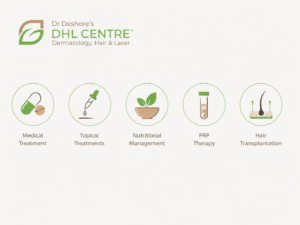
Medical Treatment
Certain medications can help manage pattern hair loss in appropriately selected patients. Treatment choice depends on sex, age, medical history, pregnancy considerations, and the type of hair loss.
A dermatologist should determine which medication is appropriate.
Topical Treatments
Some topical treatments can help stimulate or maintain hair growth in certain types of hair loss.
They generally require consistent use over time, and results vary between individuals.
Nutritional Management
If a genuine nutritional deficiency is identified, correcting the deficiency may help improve hair shedding.
Taking supplements without identifying a deficiency is not always beneficial and can sometimes be harmful.
PRP Therapy
Platelet-rich plasma, commonly called PRP, uses components derived from the patient’s own blood and is used in selected cases of hair thinning.
PRP may be considered as part of a broader hair restoration plan depending on the diagnosis and treatment goals.
Hair Transplantation
Hair transplantation may be considered for suitable patients with permanent pattern hair loss who have adequate donor hair.
It is generally not the first step for every person experiencing hair shedding. The underlying cause and stability of hair loss should be evaluated first.
What Is the Best Hair Loss Treatment?
There is no single best treatment for every type of hair loss.
For example, temporary shedding caused by illness or nutritional deficiency may improve when the underlying trigger is addressed. Pattern hair loss may require long-term medical treatment. Patchy hair loss may require evaluation for autoimmune or inflammatory conditions.
This is why searching only for the “best” procedure may not be enough. Correct diagnosis is more important than choosing a treatment based on popularity.
A personalized plan from a Hair Specialist in Indore can help determine the most appropriate approach.
Can Hair Loss Be Prevented?
Not every form of hair loss can be prevented, especially genetically influenced conditions. However, several habits can support scalp and hair health.
Maintain a Balanced Diet
Adequate protein, iron, vitamins, minerals, and overall nutrition support normal hair growth.
Avoid Crash Diets
Rapid weight loss and severe calorie restriction can trigger excessive shedding.
Avoid Tight Hairstyles
Repeated pulling can place stress on hair follicles and contribute to traction-related hair loss.
Handle Hair Gently
Avoid excessive heat, aggressive brushing, and unnecessary chemical processing.
Treat Scalp Conditions
Persistent dandruff, itching, inflammation, or scalp infections should be evaluated and treated appropriately.
Manage Stress
Long-term stress can affect the hair growth cycle in some individuals. Adequate sleep, regular physical activity, and healthy stress-management habits may support overall wellbeing.
Hair Care Mistakes That Can Worsen Hair Problems
Some common habits can contribute to hair shaft damage or scalp irritation.
These include:
- Excessive heat styling
- Frequent chemical treatments
- Tight hairstyles
- Aggressive brushing
- Scratching the scalp
- Using harsh products
- Ignoring persistent dandruff
- Following extreme diets
- Using unverified hair-growth products
Good hair care cannot completely prevent genetic hair loss, but it can help reduce avoidable damage.
When Should You Consult a Hair Specialist?
You should consider professional evaluation when hair loss is persistent, progressive, sudden, or associated with other symptoms.
Early consultation is especially important when:
- Bald patches appear suddenly
- Hair loss progresses rapidly
- The scalp becomes painful or inflamed
- There is significant scaling or redness
- Eyebrows or eyelashes are affected
- Hair loss follows a new medication
- There are signs of hormonal imbalance
- Hair loss begins after significant illness
- You have a strong family history of pattern hair loss
A Hair Specialist in Indore can assess whether the condition is temporary, progressive, inflammatory, nutritional, hormonal, or hereditary.
Why Early Treatment Matters
Hair follicles can become progressively smaller in some forms of hair loss. Once follicles are significantly damaged or destroyed, restoring hair becomes more difficult.
This is why early evaluation may be beneficial, particularly for progressive pattern hair loss.
Starting appropriate Hair Regrowth Treatment in Indore at an earlier stage may help preserve existing hair and improve the chance of maintaining density over time.
Early treatment does not guarantee complete regrowth, and outcomes depend on the type and severity of hair loss.
How Long Does Hair Loss Treatment Take to Work?
Hair growth is a slow biological process, so most treatments require patience.
Some forms of temporary shedding may improve after the underlying trigger is corrected. Treatments for pattern hair loss may require several months before meaningful changes become noticeable.
Patients should generally avoid judging treatment effectiveness after only a few weeks.
Regular follow-up can help assess whether shedding is reducing, density is improving, or the treatment plan needs adjustment.
Can Stress Cause Hair Loss?
Yes. Significant physical or emotional stress can affect the normal hair growth cycle.
Stress-related shedding may occur after events such as:
- Major illness
- Surgery
- Significant emotional stress
- Rapid weight loss
- Severe dietary restriction
- Major hormonal changes
The increased shedding may not begin immediately after the triggering event. Because of the natural hair cycle, it can become noticeable later.
If shedding persists or is severe, other causes should also be considered.
Can Hair Loss Be Reversed?
The possibility of reversal depends on the underlying cause.
Temporary shedding caused by a reversible trigger may improve once the underlying problem is addressed. Some forms of pattern hair loss can be managed and slowed with appropriate treatment, particularly when identified early.
However, follicles that have been permanently destroyed by scarring conditions cannot generally be restored through standard medical treatment.
This is why accurate diagnosis is essential before choosing Hair Growth Treatment in Indore.
Why Choose Dr. Dashore’s DHL Skin Centre for Hair Loss Treatment in Indore?
Hair loss can involve multiple contributing factors, making professional assessment important before starting treatment.
Dr. Dashore’s DHL Skin Centre has more than three decades of experience in dermatology and offers comprehensive skin and hair care services. Patients experiencing hair fall can receive individualized evaluation and treatment planning based on their hair loss pattern, scalp condition, and underlying concerns.
Key features include:
- More than 35 years of dermatology experience
- Dedicated skin and hair treatment facilities
- Advanced diagnostic and treatment technologies
- Personalized treatment plans
- Experienced dermatology specialists
- Evidence-based treatment protocols
- Hair restoration and scalp care services
- PRP and other advanced hair procedures
- Individual assessment before treatment
- Focus on natural-looking outcomes
The treatment approach is based on the cause and stage of hair loss rather than applying the same procedure to every patient.
Why Choose Dr. Shuken Dashore?
Dr. Shuken Dashore is a dermatologist with experience in advanced skin, hair, laser, and aesthetic procedures. His professional work includes clinical dermatology, research, and innovation in dermatological treatments.
He has received international training and has been recognized for his contributions to dermatology and dermatosurgery.
Some of his professional highlights include:
- International training in dermatology
- Recipient of the All India Best Young Dermatologist Award 2024 at DERMACON, Hyderabad
- Research experience in advanced skin and hair treatments
- Published research papers in dermatology and dermatosurgery journals
- Invited faculty at international dermatology conferences
- Recipient of the IADVL President’s Appreciation Award
- Recipient of the ACSI Best Innovation Award
- Experience with PRP, mesotherapy, hair transplantation, and laser procedures
- Focus on evidence-based dermatology
- Personalized treatment planning according to individual patient needs
For individuals experiencing persistent Hair Loss in Men and Women, professional evaluation can help identify the cause and determine an appropriate treatment strategy.
Hair Loss in Men and Women: Key Differences
Although both men and women can develop similar hair disorders, the presentation can differ.
| Feature | Men | Women |
| Common pattern | Receding hairline and crown thinning | Diffuse thinning and widening part |
| Genetic hair loss | Very common | Also common |
| Hormonal factors | Can contribute | Often important |
| Postpartum shedding | Not applicable | Common temporary trigger |
| Hairline involvement | Often prominent | Usually less pronounced |
| Evaluation | Pattern, scalp, medical history | Pattern, scalp, hormonal and nutritional factors |
These are general patterns rather than strict rules. A dermatologist should assess each individual case.
Summary
Hair Loss in Men and Women can occur for many different reasons, ranging from genetics and ageing to stress, nutritional deficiencies, hormonal changes, scalp conditions, medications, and underlying medical problems. While some daily hair shedding is normal, persistent or progressive thinning should not be ignored.
Early warning signs include a receding hairline, widening hair part, thinner ponytail, increased scalp visibility, sudden bald patches, excessive shedding, and changes in scalp health. Recognizing these signs early can help patients seek appropriate evaluation before the condition progresses.
Hair Loss Treatment in Indore may involve medical treatment, topical therapy, nutritional correction, PRP, scalp care, or hair transplantation depending on the diagnosis. There is no single treatment that works for every type of hair loss.
At Dr. Dashore’s DHL Skin Centre, patients receive individualized assessment and treatment planning based on the underlying cause, hair loss pattern, scalp condition, and personal goals. Early professional guidance can help protect existing hair, address reversible causes, and select appropriate treatment options.
Frequently Asked Questions (FAQs) – Hair Loss Treatment in Indore
1. How much hair loss is normal every day?
Some daily hair shedding is normal because hairs naturally move through different growth and resting stages. However, noticeably increased shedding or progressive thinning should be evaluated if it persists.
2. What are the common causes of hair loss in men?
Common causes include male pattern hair loss, genetics, stress, nutritional deficiencies, scalp disorders, hormonal problems, certain medications, and underlying medical conditions.
3. What are the common causes of hair loss in women?
Women may experience hair loss due to female pattern hair loss, hormonal changes, postpartum shedding, nutritional deficiencies, stress, thyroid disorders, scalp conditions, and certain medications.
4. What are the early signs of hair loss?
Early signs may include increased shedding, a receding hairline, widening hair part, thinner ponytail, visible scalp, reduced hair density, and progressively finer hair.
5. When should I consult a Hair Specialist in Indore?
Consider consultation when hair loss is persistent, progressive, sudden, associated with bald patches, or accompanied by scalp redness, scaling, itching, pain, or other symptoms.
6. Can stress cause hair loss?
Yes. Significant physical or emotional stress can temporarily disrupt the hair growth cycle and lead to increased shedding. Persistent shedding should still be evaluated for other possible causes.
7. Can nutritional deficiencies cause hair loss?
Yes. Certain nutritional deficiencies, including iron deficiency, can contribute to hair shedding in some people. Testing can help identify whether a deficiency is present.
8. Is Hair Transplant in Indore suitable for everyone?
No. Hair transplantation is generally considered for selected patients with permanent pattern hair loss and an adequate donor area. A dermatologist should first evaluate the cause and stability of hair loss.
9. Does PRP help with hair loss?
PRP may be considered for selected types of hair thinning. Its suitability and expected benefit depend on the diagnosis, stage of hair loss, and individual factors.
10. How long does Hair Regrowth Treatment in Indore take to show results?
Hair growth is gradual. Depending on the treatment and cause, noticeable changes may take several months. Consistency and appropriate follow-up are important.
Conclusion – Hair Loss Treatment in Indore
Hair loss should not always be considered a normal part of ageing. While some shedding is expected, persistent hair fall, progressive thinning, receding hairlines, widening hair parts, or bald patches may indicate a condition that requires professional evaluation.
Hair Loss Treatment in Indore can involve different approaches depending on whether the underlying problem is genetic, hormonal, nutritional, inflammatory, stress-related, or caused by another medical condition. Early diagnosis can be particularly valuable for progressive forms of hair loss because preserving existing follicles is often easier than treating advanced hair loss.
If you are experiencing ongoing Hair Loss in Men and Women, consulting a qualified dermatologist or Hair Specialist in Indore can help identify the cause and establish realistic treatment expectations. At Dr. Dashore’s DHL Skin Centre, treatment is personalized according to the individual’s scalp condition, hair loss pattern, medical history, and goals.
With appropriate diagnosis, evidence-based treatment, healthy hair-care practices, and regular follow-up, many forms of hair loss can be managed more effectively while supporting healthier-looking and stronger hair.